

Build Thoughtful Systems, One Concept at a Time
More Than Syntax: Learn How Systems Think
-

Clear Progression
Follow an organized course path that moves from Rust foundations toward architecture, reliability, performance analysis, and integrated systems design.
-

Practical Examples
Study concepts through focused examples that connect ownership, memory handling, task coordination, testing, and resource management.
-

Guided Practice
Strengthen understanding with structured exercises, review questions, diagrams, code analysis activities, and carefully planned course projects.
-

Connected Concepts
Explore how Rust features work together across data design, concurrency, asynchronous workflows, diagnostics, and larger system components.


30-days refund guarantee

Begin with a Free Rust Learning Resource
Notes from the Learning Journey
-

Steven Benson
Steven came to Torvenixarex with general programming experience but found ownership, borrowing, and lifetime relationships difficult to connect with larger systems tasks. The structured module sequence, annotated examples, and memory-flow diagrams helped him review each concept within a broader engineering context. “The materials gave me a clearer way to trace where data moves and why each component holds responsibility for it.”
-

Sadie Pierce
Sadie began with application-development experience and wanted to understand how Rust could be used for resource-aware system components. The progressive course format helped her connect data modeling, memory management, testing, and component boundaries without introducing every topic at once. “The step-by-step structure made it easier to pause, review an example, and continue when the relationship between the concepts felt clear.”


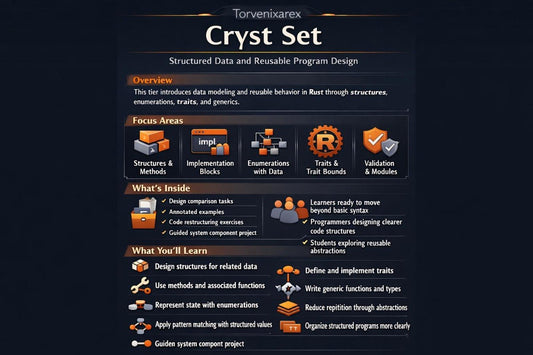
Follow the Architecture of Rust Learning
-
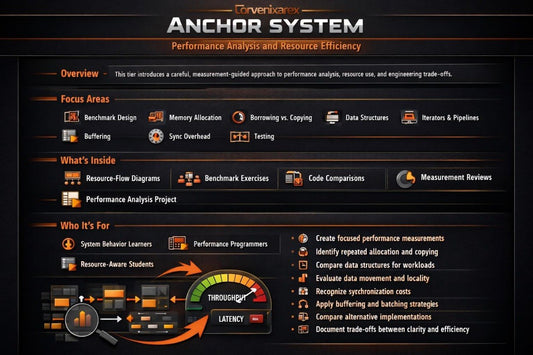
Anchor System
Regular price €301,00 EURRegular price -
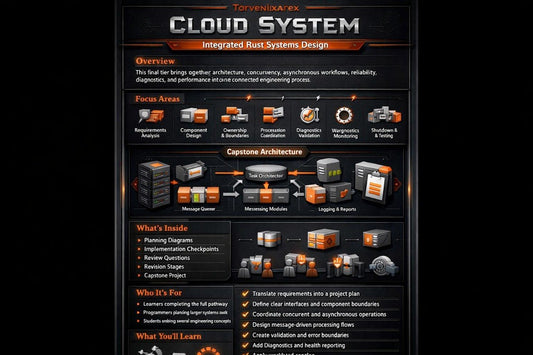
Cloud System
Regular price €483,00 EURRegular price -
-
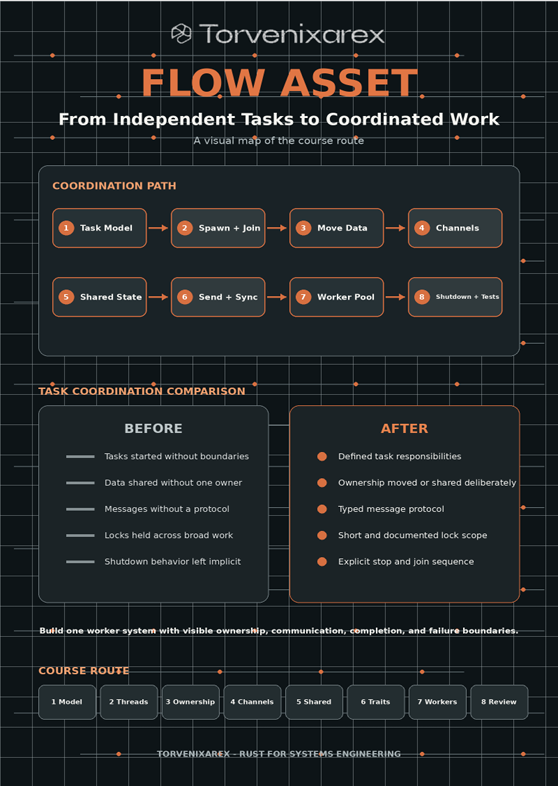
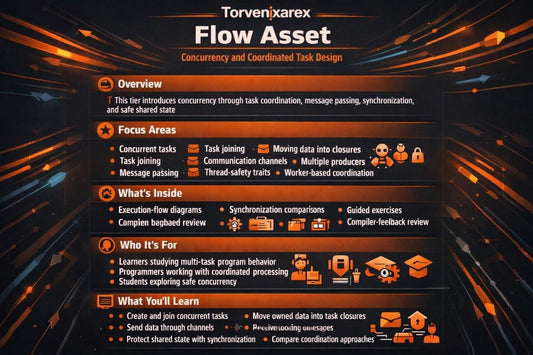
Flow Asset
Regular price €197,00 EURRegular price -
-
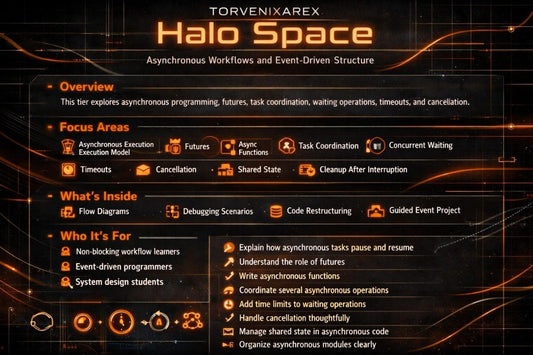
Halo Space
Regular price €202,00 EURRegular price -
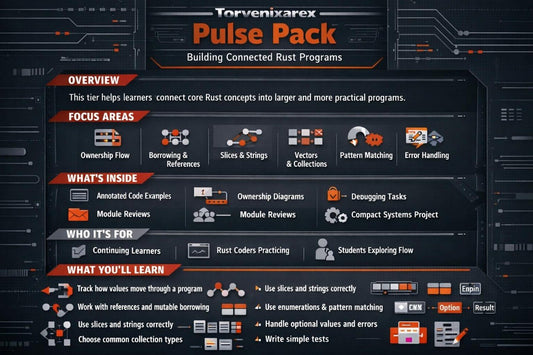
Pulse Pack
Regular price €73,00 EURRegular price -
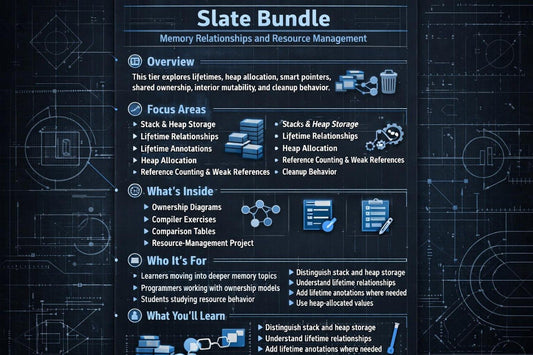
Slate Bundle
Regular price €172,00 EURRegular price








Available on all devices


Created from a Need for Clearer Systems Learning

The People Behind Every Module
-

David Cummings
Systems Software Engineer
David designs low-level software components with careful attention to ownership, memory use, and resource boundaries. His work includes reviewing data flow, organizing modules, and examining how system components interact. He also documents technical decisions so development teams can understand the reasoning behind each implementation choice.
-

Mila Payne
Systems Architecture Engineer
Mila is responsible with planning component boundaries, interfaces, and data movement across larger Rust projects. She works with module structures, trait-based interfaces, configuration layers, and testing strategies. Her approach centers on separating responsibilities clearly and reducing unnecessary connections between technical components. -

Lily Welch
Memory Systems Specialist
Maren focuses on ownership relationships, lifetimes, heap allocation, shared data, and cleanup behavior in Rust. She reviews resource wrappers, reference patterns, and data structures that require careful memory planning. Her role involves explaining complex memory relationships through diagrams, examples, and detailed technical notes.


